Our Everest Expedition and Lhotse Expedition – 2026 is CONFIRM to run, few slots are left now.
Dream Himalaya Adventures is proud to confirm that we are 100% running the Mt. Everest & Mt. Lhotse Expedition in...
We are just one email away
info@dreamhimalayaadventures.com
Ask Expert (WhatsApp)
+9779841212242
DHA/EBC-17
Nepal
17 Days
Trekking over 5,000m
You need to be in average physical condition and able to walk up to a maximum of 7 hours a day on a very step unpaved trails and track. Some hills/peaks climbing including high passes without using of climbing equipment may be involved and taking you to the maximum elevation of 5,500meter above sea level.
5,550m
12
March, April, May, September, October, November, December
Everest Region
Kathmandu / Kathmandu
2 - 15
Teahouse basis
4-7 hours
Fit trekkers
| Day | Activity | Overnight Elevation (meters) |
| Day 1 | Arrival in Kathmandu, Transfer to hotel, Trip briefing | 1,400 |
| Day 2 | Necessary Preparation & Packing, Drive to Ramechhap/Manthali | 474 |
| Day 3 | Fly to Lukla, Trek to Phakding | 2,610 |
| Day 4 | Trek to Namche Bazaar | 3,440 |
| Day 5 | Acclimatization hike – Everest View Hotel & Khumjung Village, return to Namche | 3,440 |
| Day 6 | Trek to Tengboche | 3,860 |
| Day 7 | Trek to Dingboche | 4,410 |
| Day 8 | Acclimatization hike – Nagarjun Peak, return to Dingboche | 4,410 |
| Day 9 | Trek to Lobuche | 4,910 |
| Day 10 | Trek to Gorakshep | 5,140 |
| Day 11 | Trek to Everest Base Camp & return to Gorakshep | 5,140 |
| Optional | Sleep at EBC: Trek to EBC & Overnight Camping | 5,364 |
| Day 12 | Climb Kala Patthar, Trek to Pheriche | 4,240 |
| Day 13 | Trek to Namche Bazaar | 3,440 |
| Day 14 | Trek to Lukla, Free evening | 2,840 |
| Day 15 | Fly Lukla to Ramechhap, Drive to Kathmandu, Celebration dinner | 1,400 |
| Day 16 | Kathmandu sightseeing tours / Emergency Day for Lukla Flight | 1,400 |
| Day 17 | International Departure as per schedule | – |
Highest Altitude
1,400m
Meals
Welcome Dinner
Accommodation
4-Star Hotel, room sharing BB basis
As you step out of the Tribhuvan International Airport, Kathmandu city will immediately feel alive. You’ll notice many vehicles weaving through traffic and street vendors. Soon, our representative will take you to hotel on a private vehicle, where you will spend the night. You’ll see vibrant traditional Nepali shops, cafes, and restaurants on the way to your hotel. It’s a busy, colorful introduction to Nepal and life here.
Later, we will meet you to brief you on the trek, introduce you to our Sherpa guide and porter, and then check if you have all the necessary gear. You may enjoy the remainder of the day at the hotel or wander outside for your first momo or authentic dal bhat at popular Thakali spots (Thakali Kitchen, Nepali Chulo, or Bhojan Bhumi Thakali). You may find the city chaotic at first, but it won’t be overwhelming. The services and Nepali culture will make you feel at home. It’s like a perfect prelude before you start the famous EBC Trek.
Drive Distance
132km
Elevation loss/gain
926m loss
Drive Duration
5 hours
Highest Altitude
474m
Meals
Breakfast, Dinner
Accommodation
Resort or Hotel with Meals
This morning, we’ll load our duffels, double-check our gear, and leave Kathmandu behind. During the drive, the road twists past terraced hillsides where farmers work the fields, and small roadside shops sell snacks. We can see the Sun Koshi River carving its way through deep valleys between the Mahabharat Range and the Himalayas, a reminder of the wild landscapes to come.
By afternoon, we arrive in Manthali, Ramechhap, a quiet riverside town where life feels simple and unhurried. Chickens wander the streets, the air is fresher, and at night the stars feel brighter than in the city. It’s not glamorous, but it’s peaceful, and it places us right where we need to be for tomorrow’s flight into the mountains.
Trek Duration
3 hours
Trek Distance
7.8km
Elevation loss/gain
2,136m gain
Flight Hours
20 minutes
Highest Altitude
2,840m
Meals
Breakfast, Lunch, Dinner
Accommodation
Teahouses
We start the day with a flight from Ramechhap to Lukla, where the small airstrip welcomes us with a rush of excitement. As soon as we land, we feel the fresh mountain air and the energy of the Himalayas around us. Our trek begins with a gentle descent through Sherpa villages, where colorful prayer flags and mani walls line the trail. Crossing the Thado Koshi Bridge, we are rewarded with our first clear view of Kusum Kanguru, standing tall and majestic against the sky.
We then follow the Dudh Koshi River, walking through pine forests and past small teahouses that add charm to the journey. The trail is fairly easy, giving us time to enjoy the scenery and adjust to the altitude. By afternoon, we reach Phakding, a riverside village where we settle into a cozy family-run teahouse. Here, we enjoy warm hospitality, a hearty meal, and the calm sound of the river before resting for the night.
Trek Duration
6 hours
Trek Distance
10.4km
Elevation loss/gain
830m gain
Highest Altitude
3,440m
Meals
Breakfast, Lunch, Dinner
Accommodation
Teahouse
On day 4, we will wake up early and continue our journey along the Dudh Koshi River, surrounded by pine and rhododendron forests. We will cross several suspension bridges, including the famous Hillary Bridge. We will then enter the Sagarmatha National Park, a UNESCO World Heritage Site. Along the way, we will pass the permit checkpoint required for the Everest Base Camp trek and will catch our first glimpses of the high Himalayan peaks. The villages we pass will be filled with prayer flags and mani walls that show the Sherpa culture.
As we arrive in Namche Bazaar, the main town of the Khumbu region, we will see vibrant markets, shops, and teahouses. We will check into our cozy teahouse and enjoy the spectacular mountain views surrounding the town. The evening will be perfect for exploring the local market, interacting with friendly Sherpas, or simply enjoying a warm meal while soaking in the unique Himalayan atmosphere.
Trek Duration
4 hours
Trek Distance
6.7km
Elevation loss/gain
400m gain/loss
Highest Altitude
3,840m
Meals
Breakfast, Lunch, Dinner
Accommodation
Teahouse on room sharing
Namche Bazaar is the main trading hub between local Sherpas and people from Tibet. It is also called the capital of Sherpa land. Spending a rest day here is wise to acclimatize to the altitude. During the day, we will take a short hike to the nearby Everest View Hotel. Everest View Hotel is 2 hours away from Namche Bazaar. The place offers 360-degree views of Mount Everest. Another place we will explore is the Khumjung Village. At Khumjung, we will explore the Khumjung monastery where the Yeti scalp is kept. We will also visit the Khumjung Hillary School, built with the support of Sir Edmund Hillary.
Later on, we will visit local monasteries and see how the Sherpa people live in Namche. Namche offers the most modern facilities in the region, including a hospital, post office, shops, and guesthouses. After a day of exploring and resting, we will stay overnight in Namche to prepare for the higher-altitude trek ahead. The day will be a perfect combination of acclimatization because of the cultural exploration and incredible Himalayan scenery.
Trek Duration
5-6 hours
Trek Distance
9.2km
Elevation loss/gain
420m gain
Highest Altitude
3,860m
Meals
Breakfast, Lunch, Dinner
Accommodation
Teahouse
After a well-deserved rest, we’ll leave Namche Bazaar early in the morning and begin our trek to Tengboche. Leaving the town behind, we will follow a trail through dense forests of rhododendron, pine, and oak. The Everest Base Camp trek path will gradually climb, offering glimpses of snow-capped peaks like Ama Dablam, Thamserku, and Kangtega in the distance. Along the way, we will pass through small villages such as Phunki Thenga, where prayer flags are waving in the wind and friendly locals go about their daily routines.
When we reach Tengboche, the famous Tengboche Monastery will greet us with the scent of incense and the sound of monks chanting. The monastery will give us a clear view of Buddhist life and Sherpa traditions. We will explore, meet locals, and see their rituals. Surrounded by the Himalayas, this stop will let us rest and prepare before we continue higher into the Khumbu region.
Trek Duration
5 hours
Trek Distance
10.8km
Elevation loss/gain
550m gain
Highest Altitude
4,410m
Meals
Breakfast, Lunch, Dinner
Accommodation
Tea house
We will leave the peaceful village of Tengboche behind us today. The trail will take us through pine and rhododendron forests. We will pass small settlements, mani walls, and chortens that reflect the local culture and traditions. Ama Dablam will rise majestically above us, and the scenic views along the Lobuche River will keep us motivated. As we enter the Imja Valley, the landscape will gradually open up to rocky ridges and flowing streams.
The final section of the trek will be a steeper climb as we approach Dingboche. Dingboche is a larger village beneath the towering north face of Ama Dablam. From here, we will enjoy views of Lhotse, Nuptse, Island Peak, and the surrounding trekking peaks. Dingboche will be an ideal place to rest and acclimatize at this higher altitude. We will settle into our cozy teahouse, enjoy a warm meal, and spend the evening in the serene Himalayan atmosphere.
Trek Duration
4 hours
Elevation loss/gain
675m gain/loss
Highest Altitude
5,085m
Meals
Breakfast, Lunch, Dinner
Accommodation
Teahouse
Today will be the second acclimatization day during the trek to EBC to help our bodies adjust to the altitude. After breakfast, we will set out on a short but steep hike up to first Nagarjun Peak, which sits above Dingboche. The trail will be challenging, but every step will reward us with expanding views of the Himalayas. From the top, we will enjoy a surreal view of Makalu, Lhotse, Ama Dablam, Island Peak, and the upper Imja Valley.
We will spend some time enjoying the scenery before heading back down to Dingboche for lunch. The afternoon will be free to rest, explore the village, or simply enjoy the peaceful mountain surroundings. This acclimatization hike will not only give us incredible views but also prepare us well for the higher elevations ahead.
Trek Duration
5 hours
Trek Distance
7.9km
Elevation loss/gain
500m gain
Highest Altitude
4,910m
Meals
Breakfast, Lunch, Dinner
Accommodation
Teahouse
Following 17 days Everest Base Camp Trek itinerary, we will begin our trek with gradual trails leaving Dingboche, surrounded by spectacular views of peaks like Taboche and Cholatse. The trail will slowly climb towards Thukla, where we will stop for tea or lunch. From here, we will make a steep ascent up the Thukla Pass, lined with memorials built in honor of climbers who lost their lives on Everest. This place will be both beautiful and deeply moving, set against the dramatic backdrop of the Himalayas.
After crossing the pass, the EBC trek path will become gentler as we make our way along the glacial moraine of the Khumbu Glacier. The landscape will become more rugged, with fewer trees and more rocky terrain. As we approach Lobuche, we will be welcomed by stunning views of Nuptse, Pumori, and the surrounding peaks. We will spend the evening resting at the teahouse and fantasizing about the exciting journey towards Everest Base Camp in the coming days.
Trek Duration
3-4 hours
Trek Distance
4.5km
Elevation loss/gain
230m gain
Highest Altitude
5140m
Meals
Breakfast, Lunch, Dinner
Accommodation
Teahouse
Today’s trek will be short but challenging, as the trail will become steeper and more rugged. We will follow the Everest Base Camp path along the Khumbu Glacier through rocky moraine and dry glacial landscapes. The air will get thinner as we reach high altitude, so we will take a steady pace with plenty of rest. Throughout the trek, we will enjoy views of mighty peaks such as Pumori, Nuptse, and even the tip of Everest appearing in the distance.
After a few hours of trekking, we will reach Gorakshep, the highest permanent settlement with teahouses on the EBC route. The village sits on a sandy flat beside frozen lakes and offers incredible views of the surrounding mountains. Here, we will check into our teahouse, take some rest, and prepare for the next big adventure—our trek to Everest Base Camp.
Trek Duration
6 hours
Trek Distance
7km
Elevation loss/gain
200m gain/loss
Highest Altitude
5,365m
Meals
Breakfast, Lunch, Dinner
Accommodation
Teahouse
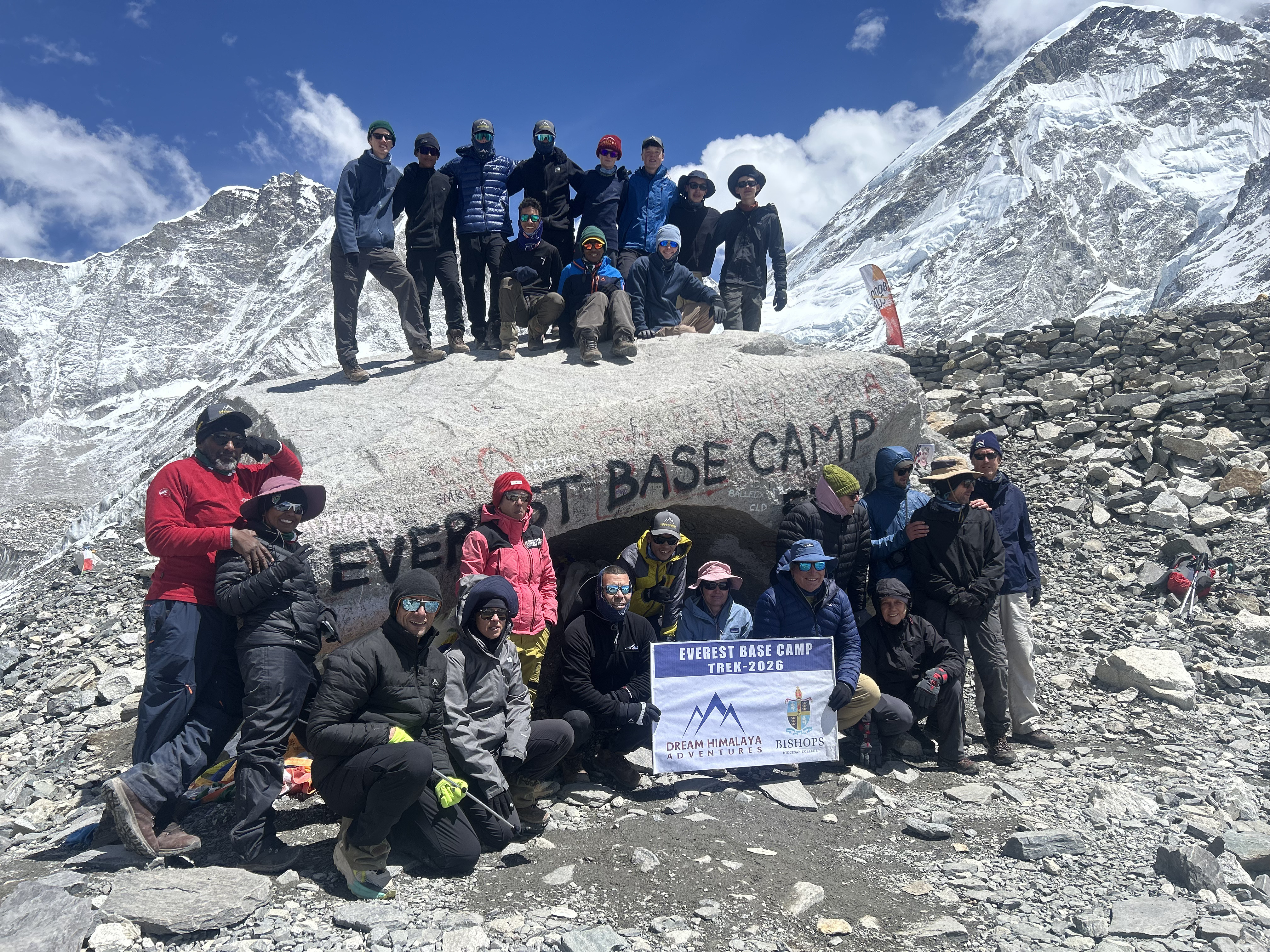
Today will be one of the most exciting days of the entire trek. We will hike to Everest Base Camp on this day. We will leave Gorakshep after breakfast and follow a rocky trail that winds along the Khumbu Glacier. The path will be challenging with loose rocks and glacial moraine, but the scenery will be spectacular. As we get closer, we will see the famous Khumbu Icefall, the starting point for climbers heading to the summit of Mount Everest. After a few hours, we will finally reach Everest Base Camp at 5,364 meters. Here, we will celebrate our achievement, take photos, and soak in the incredible views of Nuptse, Pumori, and other surrounding peaks.
After spending some time at base camp, we will return to Gorakshep for the night. For those who choose to camp at EBC, the day will unfold differently: first, an early climb to Kala Patthar (5,550 meters) for a surreal sunrise view of Mount Everest, then a trek to Everest Base Camp to set up camp for an overnight stay. Whether staying at Gorakshep or camping at EBC, this day will be a major highlight of the journey and a dream come true for many trekkers.
Trek Duration
4 hours + 5 hours
Trek Distance
10.9km
Elevation loss/gain
386m gain , 1,310m loss
Highest Altitude
5,550m
Meals
Breakfast, Lunch, Dinner
Accommodation
Teahouse
We will start the day early with a climb to Kala Patthar, one of the best viewpoints in the Khumbu region. The trail will be steep and challenging, but reaching the top will reward us with an unforgettable sunrise view over Mount Everest, Lhotse, Nuptse, Ama Dablam, and many other peaks. The golden light on the Himalayas will make this one of the most highlight moments of the trek. After enjoying the views and taking photos, we will descend back to Gorakshep for breakfast.
From Gorakshep, we will begin our descent towards Pheriche. The descent trail will retrace rocky glacial paths before gradually leading us down to lower altitudes, where breathing will feel easier. As we pass through the familiar landscapes of the Khumbu, we will notice more greenery returning. Pheriche, a small village with a peaceful setting and stunning views of Ama Dablam, is known for its mountain research center and warm hospitality. We will spend the evening at the teahouse.
Trek Duration
6-7 hours
Trek Distance
19.5km
Elevation loss/gain
770m loss
Highest Altitude
3,440m
Meals
Breakfast, Lunch, Dinner
Accommodation
Teahouse
After breakfast in Pheriche, we will begin our long descent back toward Namche Bazaar. The trail will take us through familiar small villages, mani walls, and chortens, with Ama Dablam and other peaks still rising in the distance. As we lose altitude, the air will become thicker, and walking will feel easier. We will retrace our steps through Orsho, Pangboche, and Debuche before arriving at Tengboche, where we will once again admire the famous monastery.
From here, we will continue downhill through forests of rhododendron and pine before climbing gradually back towards Namche. Along the way, we will cross hanging bridges and pass prayer flags that add color to the trail. Arriving in Namche Bazaar will feel lively after the quiet high altitude villages, with its busy markets, bakeries, and warm teahouses. We will settle into our lodge, enjoy a hot meal, and rest for the night.
Trek Duration
6-7 hours
Trek Distance
18.2km
Elevation loss/gain
600m loss
Highest Altitude
2,840m
Meals
Breakfast, Lunch, Dinner
Accommodation
Teahouse
We will begin our final trekking day from Namche Bazaar, then descend steeply along the familiar trail. We will trek through forests of rhododendron and pine across several suspension bridges and along the bank of the Dudh Koshi River. We will pass through small mountain villages, enjoy the culture and scenery of the khumbu region, before reaching lower altitudes.
By afternoon, we will arrive in Lukla, where our trekking journey will officially come to an end. The town offers a lively atmosphere with teahouses, small shops, and bakeries. In the evening, we will have free time to relax, celebrate with the group, or simply reflect on the incredible adventure we have completed in the heart of the Himalayas.
Drive Distance
132km
Elevation loss/gain
1,440m loss
Drive Duration
5 hours
Meals
Breakfast, Farewell Dinner
Accommodation
4-Star Hotel, room sharing BB basis
We will take an early morning scenic flight from Lukla to Ramechhap, enjoying our last aerial views of Everest and the Khumbu region. After landing, we will drive for about 5 hours (132km) back to Kathmandu, passing through hills, rivers, and traditional villages along the way.
Once we arrive in Kathmandu, we will check into a comfortable 4-star hotel. In the evening, we will gather for a special farewell and celebration dinner to mark the completion of our memorable Everest Base Camp journey.
Meals
Breakfast
Accommodation
4-Star Hotel
We will spend the day in Kathmandu and explore its cultural and historical highlights. Depending on time and interest, we may visit UNESCO World Heritage Sites, such as Pashupatinath Temple and Swayambhunath (also known as the Monkey Temple), or Boudhanath Stupa. These places will give us a glimpse into Nepal’s rich history, art, and spirituality.
If the Lukla flight on the previous day is delayed due to weather, this day will also serve as an emergency buffer to ensure we return safely to Kathmandu. In the evening, we will relax at our hotel or stroll around Thamel for last-minute shopping and souvenirs.
Meals
Breakfast
According to the flight schedule, you will be transferred to Tribhuvan International Airport. Our team will assist you with the final arrangements and bid farewell as you leave Nepal. We hope you had a memorable time with us. We look forward to welcoming you once again in the future.
Cost Includes / Excludes
17 Days
8 Apr, 2026
24 Apr, 2026
USD 2,200
17 Days
20 Apr, 2026
6 May, 2026
USD 2,200
(rental fee for the trip)
(O/N stay cost)
(O/N stay cost)
For most trekkers, the Mount Everest Base Camp Trek begins with a short flight from Kathmandu to Lukla. But this flight is not always smooth. You will face a weather delay issue, which can last for days. Plus, tickets sell out quickly in high season. The flight cost is high as well. Fortunately, there is an alternative to the Lukla flight. There are road routes that connect to the Everest region. Those overland routes to EBC include:
This route offers a gentler start to the EBC trek with fewer crowds. From Kathmandu, it’s an 8–10 hour jeep ride (about 295km) through Dhulikhel and Khurkot to Salleri or Phaplu. From Salleri, it takes 3-4 days of trekking to reach Phakding. The Everest Base Camp trek without the Lukla flight itinerary trail goes through Takshindo, Kharikhola, and Puiyan before joining the main Everest Base Camp trekking trail at Phakding on Day 5.
Along the way, you’ll pass farmland, streams, monasteries, and traditional Sherpa villages. This slower approach gives you more time to acclimatize naturally, which helps your body adjust to the altitude. The only downsides are the long, bumpy jeep ride and the extra trekking days needed before joining the main EBC trail.
The Jiri to Everest Base Camp route is the classic trail first taken by Tenzing Norgay and Sir Edmund Hillary in 1953. From Kathmandu, it’s a 7–9 hour drive (173km) to Jiri. From there, the trek takes about a week before reaching Phakding. The trail passes through Bhandar, Sete, Junbesi, Nunthala, Bupsa, and Surke before merging with the main Everest Base Camp route at Phakding on Day 8.
This trek route is rich in history, culture, and landscapes. You’ll walk through rhododendron forests, rice terraces, and remote Sherpa villages, often with very few other trekkers around. It is physically demanding and adds nearly a week to the standard itinerary. Infrastructure is also more limited, but for those who love slow travel and cultural immersion, it is one of the most rewarding alternatives to the Lukla flight.
The Thamdanda EBC trek route option is currently the fastest overland alternative to Lukla. It takes 15-17 hours to reach Thamdanda from Kathmandu on a jeep. From Thamdanda, it’s a three-day trek to Phakding. Roads now reach very close to Lukla, so you may hear jeep horns before you see prayer flags.
This route is quick, so it’s a good option for those on a tight schedule. However, the sudden jump in elevation means less acclimatization time, and the long jeep ride can feel physically tiring. The Thamdanda route goes via Sallery/Phaplu on a jeep drive.
No matter which route you take to join the Everest Base Camp trek trail, one thing is for sure which is the EBC trek is not about luxury. Once you leave the city behind, you enter a world where basic food, simple lodges, and human connection matter more than comfort. You trade city noises for the sound of boots on mountain trails, fast internet connection for starlit skies, and fellow trekkers’ stories over private space.
The main meal on the trail is dal bhat. It is a filling plate of rice, lentil soup, vegetables, and sometimes meat curry. Trekkers often say, “Dal bhat power, 24 hours,” because it gives long-lasting energy needed for the long day trek and is always refillable. No energy bar can replicate the power of dal bhat on trek. And eating dal bhat in a Sherpa teahouse with other trekkers around a warm fire in a dining hall is part of the authentic EBC trekking experience.
Furthermore, accommodation on the trail is equally humble. You will stay in basic teahouses. You will get simple rooms with two single wooden beds, thin walls, and heavy blankets. There will be no privacy, as you can hear your neighbor talking in the other room, coughing, or moving around at night. This is the bad thing about the Everest Base Camp accommodations. The best thing about the EBC teahouses is that there is a communal dining hall where all trekkers gather in the evening to drink tea, warm up, and share stories. It feels less like a hotel and more like a community.
Talking about Wi-Fi connectivity, almost every teahouse offers Wi-Fi cards that cost about USD 5–10 for a few hours. The speed is slow, and the signal often drops just when you want to upload a perfect mountain photo. Some trekkers buy an Ncell SIM card, which gives 2G/3G coverage up to Everest Base Camp, but the connection is weak in many places. Many hikers eventually stop trying to stay online and instead enjoy the clear night skies filled with countless stars, a sight far brighter than any screen.
One of the biggest challenges of the Everest Base Camp trek is altitude sickness, also known as Acute Mountain Sickness (AMS). It does not only happen to one person. In fact, studies show that about 1 in 5 trekkers on the EBC trail experience some level of AMS.
The first sign of AMS usually appears around Namche Bazaar (3,440 meters), after the steep climb from Lukla. Common symptoms include headaches, tiredness, poor sleep, and loss of appetite. For many trekkers, these symptoms improve after good rest and acclimatization days. But as the Everest Base Camp trek trail climbs higher around Dingboche (4,410 meters) and above, symptoms can become more serious. Trekkers may suffer from nausea, dizziness, or shortness of breath even while resting. Such signs should never be ignored.
Here are some strategies to minimize Altitude Sickness on the EBC Trek:
Medication: Take medicine like Diamox (acetazolamide) to help prevent AMS. But always consult your doctor before using it.
Trekkers need two key permits to walk legally on the Everest trail. The Sagarmatha National Park Permit is required to enter Sagarmatha National Park, a UNESCO World Heritage Site that protects the alpine forests, Himalayan wildlife, and, of course, the world’s tallest peaks. It costs NPR 3,000 (USD 25-30) per person for foreigners and NPR 1,500 (USD 12-15) per person for SAARC nationals. You can obtain a Sagarmatha National Park permit either at the Nepal Tourism Board Office in Kathmandu or at the entry gate in Monjo. The first major checkpoint is at Monjo, just before entering Sagarmatha National Park. Officials will record your details and stamp your permit.
Another permit you require is the Khumbu Pasang Lhamu Rural Municipality Entry Permit. Introduced in 2018, this permit ensures funds flow directly to local communities for trail maintenance and waste management. It costs NPR 3,000 (USD 25-30) per person. You can get it at the permit counter in Lukla, or at Monjo if you didn’t collect it earlier in Kathmandu. Officials will typically verify this permit in Lukla right as you start the trek, and again at Monjo alongside the national park checkpoint.
The classic Everest Base Camp trek is an amazing journey on its own, but many trekkers choose to make it even more exciting by adding side trips or combining it with other routes. These add-ons bring more challenge, variety, and adventure to the trail. You can cross high mountain passes, visit hidden valleys, see turquoise lakes, or even climb a Himalayan peak. Each option gives you a different experience and makes the trek feel more personal and rewarding.
This route adds more adventure to the classic Everest Base Camp trek. You cross the high Cho La Pass (5,420 meters) and reach the beautiful Gokyo Lakes, which look like turquoise gems sitting between snow-covered mountains. From here, a short climb to Gokyo Ri (5,357 meters) gives one of the best views in the Everest region of Nepal. You can see four of the 8,000-meter peaks, Mt Everest, Lhotse, Cho Oyu, and Makalu, all at once.
Crossing Cho La Pass is exciting but can also be tough, especially if there’s ice or snow. Sometimes trekkers use crampons to walk safely. After the hard climb, you descend into the Gokyo Valley, which feels calm and less crowded than the main EBC trail. The peaceful lakes reflect the mountains like a mirror, and early in the morning, the sunrise from Gokyo Ri is mesmerizing.
This extension is perfect if you want both adventure and peace. You’ll feel the thrill of crossing an icy pass and then enjoy the quiet beauty of the lakes. Along the way, you’ll see shiny ice slabs, yaks grazing near the water, and endless mountain views stretching toward Tibet.
The Everest Three Passes Trek is the toughest but most rewarding circuit in the Khumbu. It links three high passes, Kongma La (5,535 meters), Cho La (5,420 meters), and Renjo La (5,360 meters) that take you through remote valleys and viewpoints few trekkers ever see. Many say finishing this trek feels like earning a “PhD in trekking.”
Each pass feels completely different. At Kongma La Pass, you cross a silent land of boulders with glaciers cracking far below. Cho La Pass challenges you with blue ice and narrow trails where crampons help keep your footing. Finally, at Renjo La Pass, prayer flags flutter in the wind while the whole Gokyo Valley sparkles below, with Everest rising on the horizon.
This trek is demanding, so you need strong fitness and the patience to wait if the weather changes the plan. But the reward will be endless panoramas, wild glaciers, and a sense of being in untouched corners of the Himalayas. It feels like walking through different worlds every day, from harsh rock deserts to heavenly lake valleys.
If you dream of both trekking and climbing, the Everest Base Camp + Island Peak (6,189 meters) route is a perfect choice. After reaching EBC, you continue into the wild Imja Valley, where you prepare for your first Himalayan summit. At base camp, you’ll learn basic mountaineering skills like using ropes, ice axes, and crampons, before starting the climb at midnight.
The Island Peak climbing is tough but possible for fit trekkers. You’ll cross ladders over crevasses, clip into fixed ropes, and walk along a sharp summit ridge. When you finally stand on top of Island Peak, the view is amazing. Lhotse’s giant wall rises close, while the Khumbu Glacier curls below like a frozen river, and Everest towers in the distance.
This trek is more challenging than EBC alone because it requires a climbing permit, guide, and extra gear. But that’s also what makes it special. You feel the thrill of being a real climber in the Himalayas.
Ama Dablam, often called the “Matterhorn of the Himalayas,” is one of the most beautiful peaks in Nepal. Adding a side trip to Ama Dablam Base Camp (4,600m / 15,092ft) during the EBC trek makes the Everest journey even richer. The trails here are quieter than the busy EBC route. As you reach Ama Dablam Base Camp, Ama Dablam towers above like a giant stone spire, glowing pink and gold at sunset. This detour takes a few extra days.
If you don’t have much time or don’t want to walk the same trail back, a helicopter return from Gorakshep/Lobuche/Pheriche is a perfect way to end the trek. You won’t trek for 3-4 more days to retrace your steps to Lukla; instead, you will fly back in less than an hour. It’s fast, exciting, and gives you views that walking can not match. The only downside is that it’s costly and depends on clear weather.
The moment the helicopter lifts off from Gorakshep, the hard days of trekking turn into a stunning aerial show. Below you, there will be the Khumbu Valley spread out like a map, glaciers curling through valleys, tiny villages clinging to hillsides, and yaks moving along thin trails. You might also spot the golden roof of Tengboche Monastery before the mountains fade into rolling green hills. By the same evening, you can be back in Kathmandu.
Memories from our past travelers – snapshots of joy, adventure, and unforgettable moments. Join us and create your own story!
Share your ideas and interests with
Get Inspired
Read Our Blogs & Travel Stories
Dream Himalaya Adventures is proud to confirm that we are 100% running the Mt. Everest & Mt. Lhotse Expedition in...
Tibet, the roof of the world located in western China with a border of Burma, India, Bhutan, and Nepal to...
Revised Tourist Entry Visa Fee and Arrival Process in Kathmandu Airport: When you arrive at Kathmandu Tribhuvan Airport, there are...
Speak with our worldwide representative
India
Prakash Ji
(WhatsApp/Call)India
Manmohan Samala Ji
(WhatsApp/Call)New Zealand
Paul Hersay
(WhatsApp/Call)Philippines
Romy Garduce
(WhatsApp/Call)Australia
Peter Wells
(WhatsApp/Call)